by Nick Drew | Mon 28 Sep 2026
Five all-electric Finn-made LM Trac property maintenance machines delivered to the Netherlands
Something a bit different on the blog today as we report on LM Trac machines, which have been a familiar sight on Dutch streets for decades. Well over a thousand of these machines, manufactured by Rauma-based Oy Lai-Mu Ab in Finland, are already in operation across the country.
The first internal combustion-powered LM Tracs were delivered to the Netherlands in the early 1990s. According to the importer, the vast majority of these machines remain in regular use. The global trend toward the electrification of vehicles and work machinery has led to the creation of the all-electric LM Trac 287e, which closely resembles its combustion-engine counterpart in appearance. Six of these electric LM Tracs had already been delivered to the Netherlands previously; the five machines delivered now bring the total number of electric units to over ten.
A city of just over 200,000 inhabitants in the northern Netherlands has established a roadmap for its municipal operations, with the primary goal of achieving carbon neutrality by 2035. For instance, all vehicles and work machines weighing less than 3,500 kilograms are set to be electrified. Consequently, the decision was made to acquire all-electric weed-brushing machines—used for sweeping roadsides and sidewalks—at this stage. There is several years’ worth of experience with LM Trac 287e machines in the Netherlands.
These machines have primarily been used for weed brushing—a task that might sound slightly amusing to those who are living in Finland but represents a major sector in the Netherlands. Conditions there favor long growing seasons, meaning the brushing equipment is utilized for 8–9 months of the year.
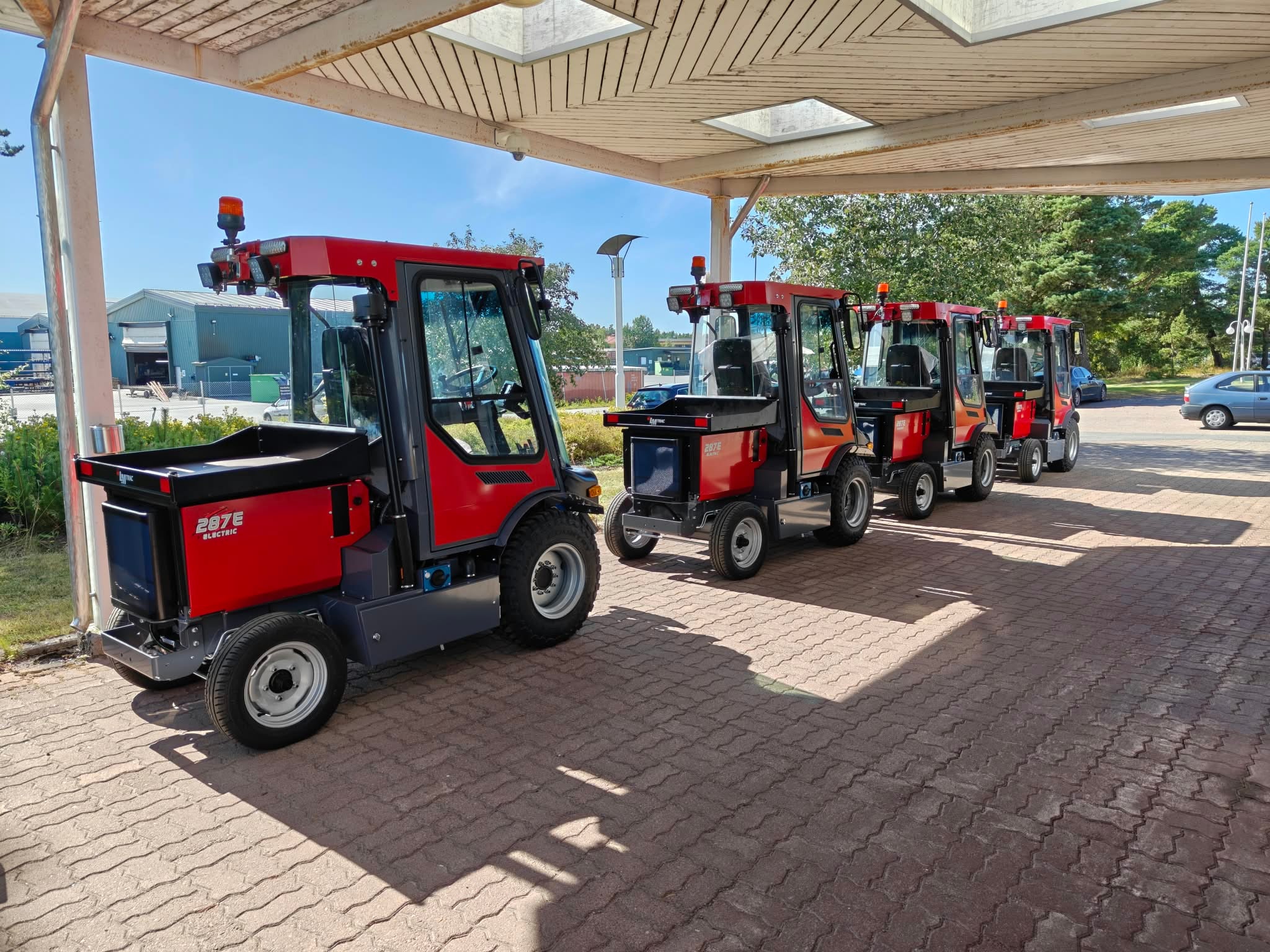
Experience with the electric LM Trac models has been promising, which contributed to the decision to purchase these five new fully electric machines.
Enough power for a full workday
The LM Trac 287e can handle a full day’s work (8 hours) on a single charge. This has been clearly demonstrated by users of the electric machines already in operation. For weed brushing, a so-called cup brush mounted on the front of the LM Trac is used. The brush unit itself was developed in the Netherlands and is the result of extensive time and experience. While the brush rotation on earlier internal combustion models was hydraulically driven, the brush unit designed for the electric machines is electrically powered, drawing energy from the base machine's battery.
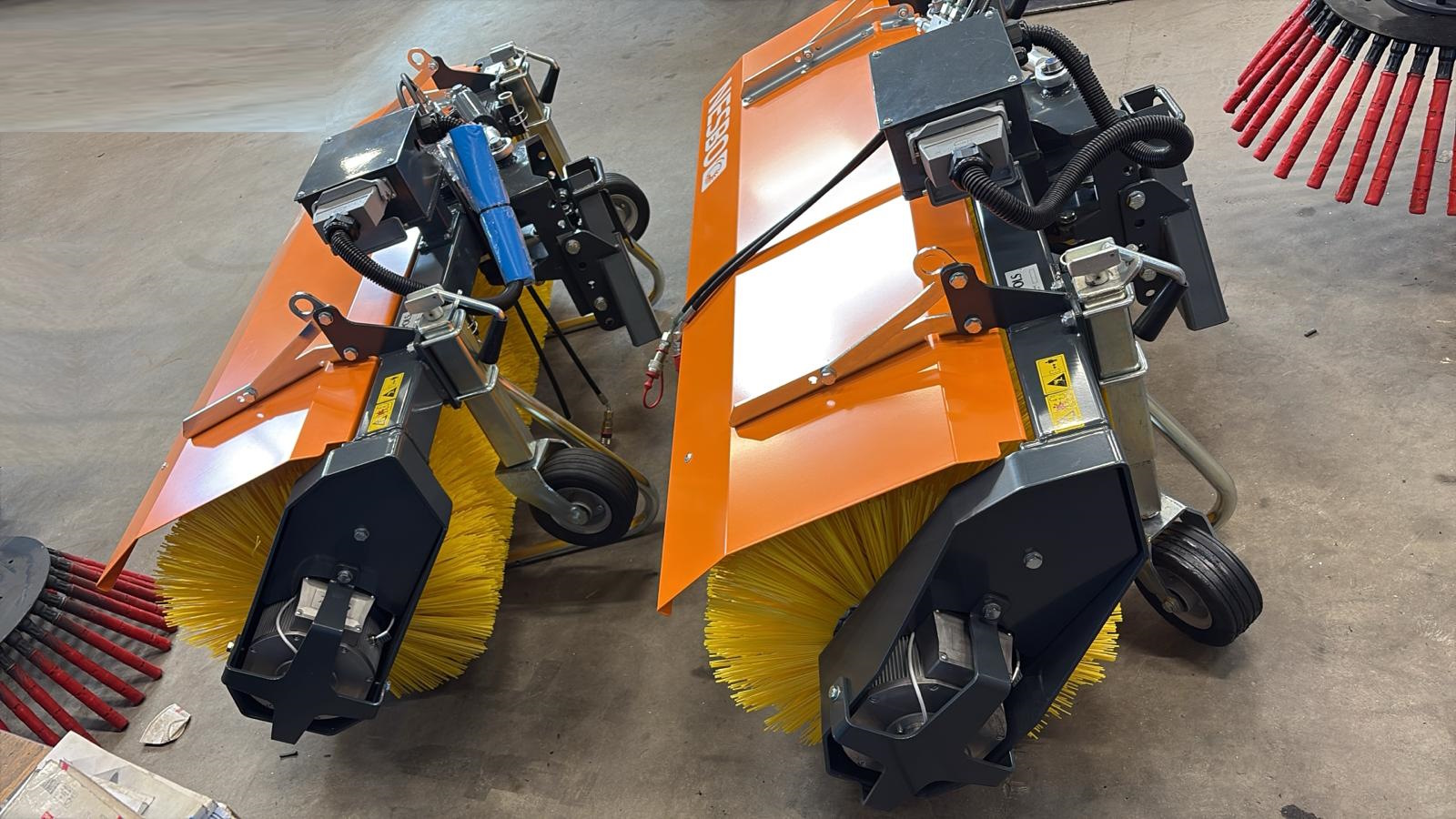
The brushing work itself is performed at a leisurely pace, keeping electricity consumption low. The highest energy consumption occurs during transit between work sites. In daily operation within a large city, transit driving can account for up to a couple of hours of a single shift. The newly delivered machines will be stationed at various depots across the university city, all of which are equipped with charging facilities. In addition, the city has its own charging points for electric equipment distributed throughout the area.
Building this infrastructure is part of the municipality's carbon neutrality goal, and it will serve all of the municipality's electric vehicles and work machines. Alongside weed-removal brushes, the new electric LM Tracs will utilize attachments such as open brushes (e.g., for snow clearing), hedge trimmers, and leaf blowers—all of which are fully electric. Indeed, the development of various electric work attachments is currently proceeding at a rapid pace in the Netherlands. Pols B.V., part of the SMT Group, is responsible for the import and sales of LM Trac machines in the Netherlands.
LM Trac 287e
The fully electric LM Trac 287e is the result of domestic product development. It was created through a collaboration between Lai-Mu and Hybria Ltd, a Finnish company specializing in the design and implementation of electric vehicles and specialized electric solutions. Externally, the LM Trac 287e closely resembles its internal-combustion counterpart (the LM Trac 287). However, its internal components—right down to the chassis structure—are completely different; in the electric model, the internal combustion engine is replaced by a battery pack. The machines delivered to the Netherlands are equipped with two 23 kWh battery packs, enabling the aforementioned eight-hour operating time.
The machine features front-wheel drive but rear-wheel steering. Both large front wheels are equipped with their own 10-kilowatt electric motor. Additionally, the machine has a third 10-kilowatt electric motor that drives the hydraulic pump, powering the front linkage and steering functions, as well as any other necessary hydraulic operations. Machines delivered to the Netherlands always feature an A-frame attachment system.
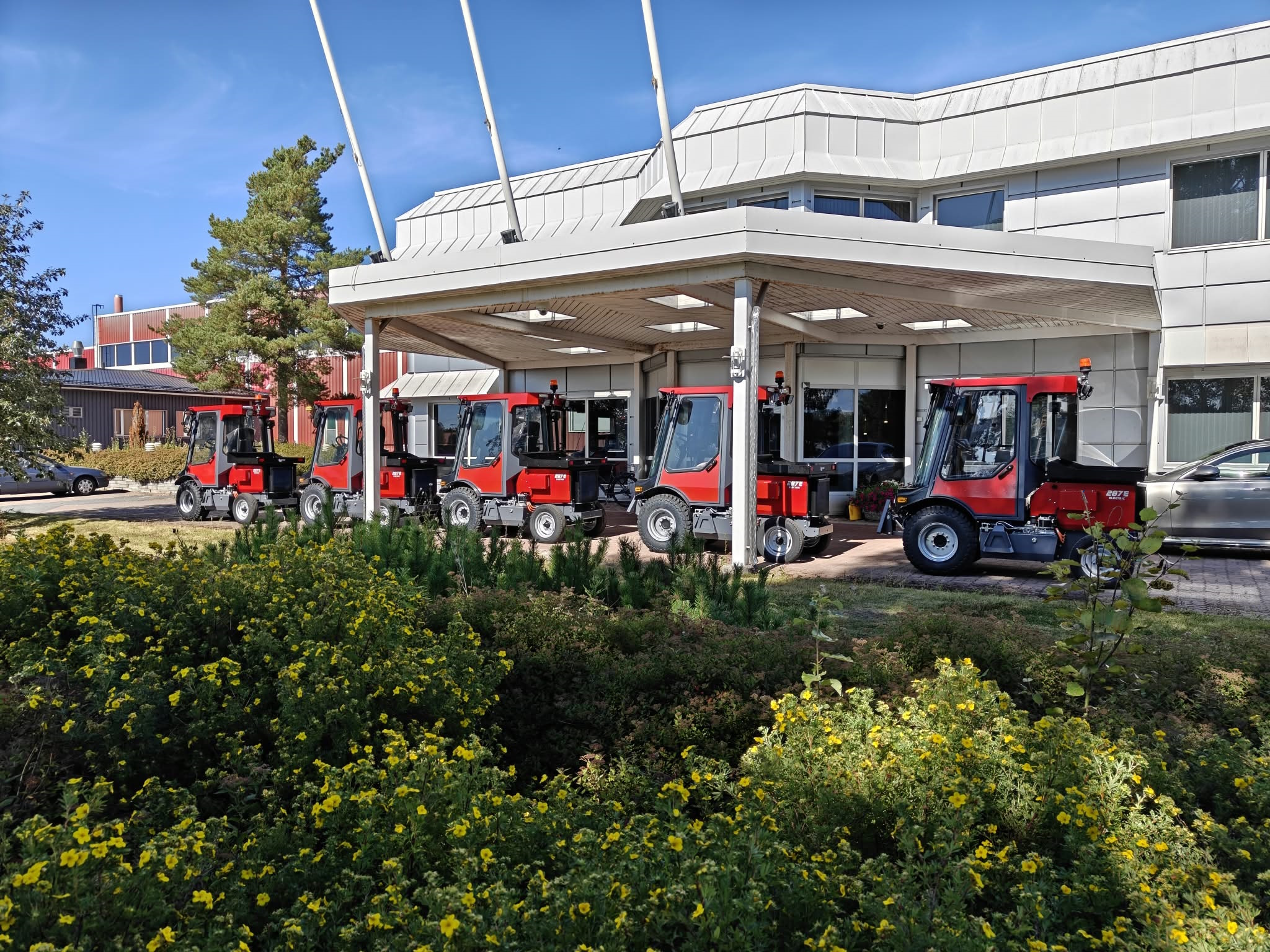
Battery charging is performed using a Type 2 connector, familiar from electric cars. The maximum charging power is nine kilowatts. Equipped with two battery packs, the 287e weighs approximately 1,800 kilograms—roughly the same as the equivalent internal combustion engine model.
Northern Netherlands has now taken a step into the future by adding electric work machines to its fleet, in line with the municipality's roadmap toward carbon neutrality. In addition to electric models, Lai-mu supplies dozens of internal combustion-powered LM Trac 287 machines to the Netherlands annually.