by Nick Drew | Tue 06 Oct 2026
Lekatech’s Electric Hammer delivering results in the field
Since its introduction shook the foundations of the global construction industry, a significant milestone in breaking has been reached as the Leka Toras 35 Electric Hammer from Lekatech has entered production. This has led to the equipment being used at customer sites with results matching the claims of the manufacturer.
One such customer site involves a construction project currently underway in Haaga, Helsinki, Finland, where an old primary school building is being transformed into a unique residential property with new apartment buildings being constructed in the surrounding grounds. The contractor, SSA Rakennus Oy, is completing the project in several phases which are taking place simultaneously.
The old school building is being renovated, old structures are being demolished in the yard, and bedrock excavation is also underway. This naturally means that operations on the site need to be both efficient and safe. Providing a further challenging complication, the project is located in a densely built residential area with many neighbouring properties. One of the closest neighbours is a daycare centre. As a result, noise and vibration – which can quickly become an issue if operations cause disturbance – has to be mitigated and controlled.
SSA Rakennus took these factors into consideration alongside sustainable construction and energy efficiency. This saw the company adopt the Finnish made Leka Toras 35 Electric Hammer from Lekatech for use on the site.
Embracing the future
Now part of the Normet Group, Lekatech Oy has been steadily developing its electric hammer technology since developing the idea in 2016, with the company being founded in 2018. Now, in 2026, it is fair to say that the technology is reaching a significant breakthrough. This not only refers to the work being undertaken by SSA Rakennus with the Leka Toras 35 but also means that the Leka Toras 35 has now entered full scale production and use.
What exactly is an electric hammer
In terms of technology, the Lekatech electric hammer is designed for rock and concrete breaking. It is also very much aligned in the same direction in which excavator technology is developing in many areas, namely full electrification. Currently the construction equipment industry is undergoing a period of transition
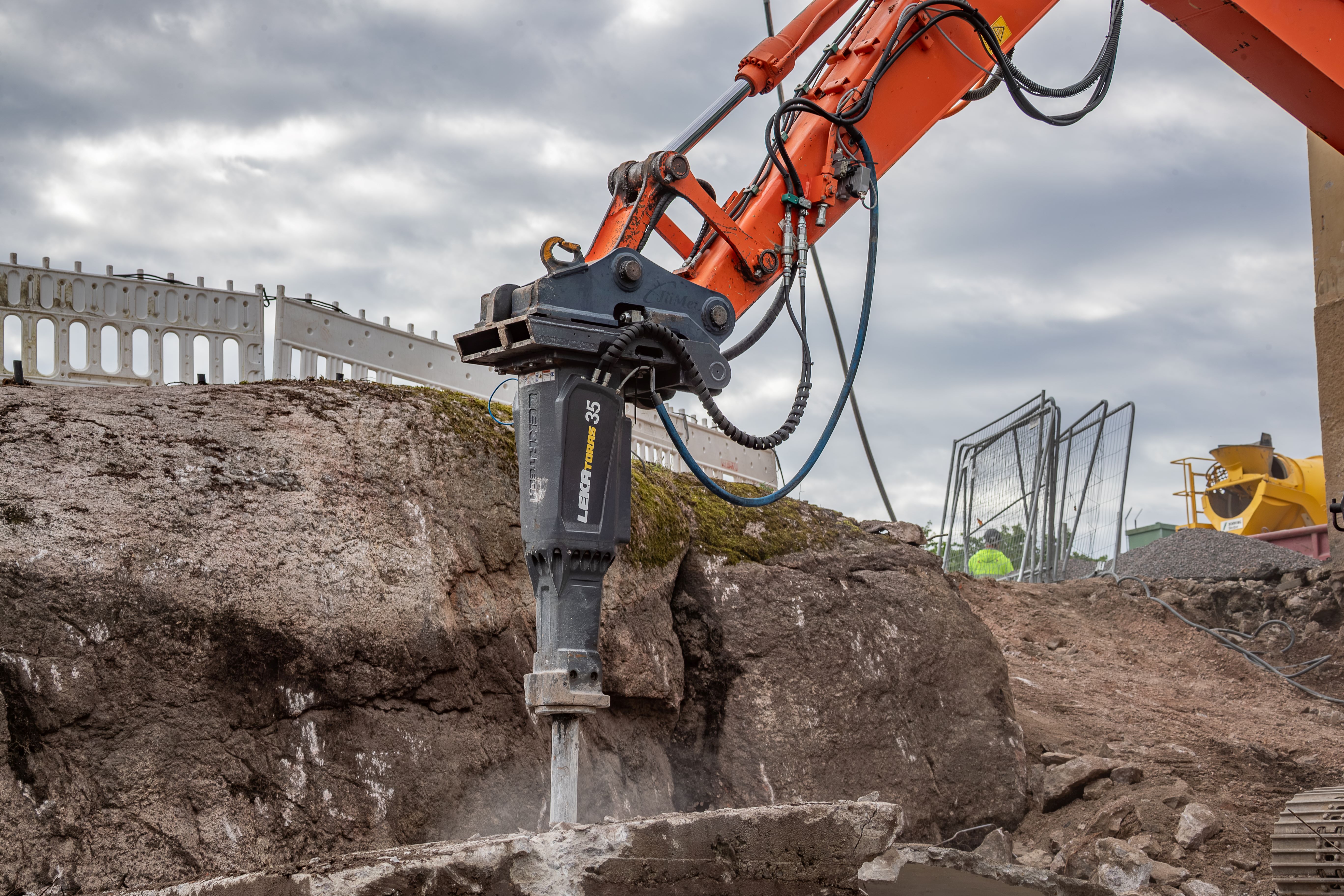
Lekatech’s hammers effectively use electrical power of an excavator or grid, providing the ideal solution for managing noise on construction sites. The combination of an electric excavator together with an electric hammer -the electric hammer can also be used with a conventional excavator, as was done on this site – provides a combination of productivity, efficiency, safety, low emissions and fuel economy.
Efficiency through electric operation
As to why an electric hammer should be used in conjunction with a diesel-powered excavator, it is essential that a closer look is taken at the technology, features and operation of the Leka Toras 35. Electricity, whether supplied directly from a battery or from the power grid, is inherently highly energy efficient. Lekatech has calculated that its electric hammer can achieve up to 75% greater energy efficiency than a hydraulic version. This is due to the fact that with an hydraulic breaker, the overall energy loss per litre of diesel becomes significant when the entire energy chain is considered, from the fuel tank to the impact at the tool tip.
As well as efficient and productive operation, the Lekatech electric hammer requires less input energy, with electricity only consumed when an impact is actually delivered. This means that the environment and the locality all benefit. Furthermore, the electric hammer does not produce emissions as found with diesel-hydraulic equipment, is quieter in its operation, and of course only uses the power it needs for breaking leading to more efficient use of power.
Light or heavy, fast or slow
The highly precise control of the electric linear motor also provides a completely different level of adjustability. With the Leka Toras 35, individual impacts can be adjusted even to parts of an individual impact. These impacts can also be monitored by the intelligence of the control system, making it possible to create efficient impact programmes tailored to different applications. As artificial intelligence and machine autonomy are becoming increasingly important, this data could potentially be used in the future to enable the hammer to learn during operation which impact method works best in each situation.
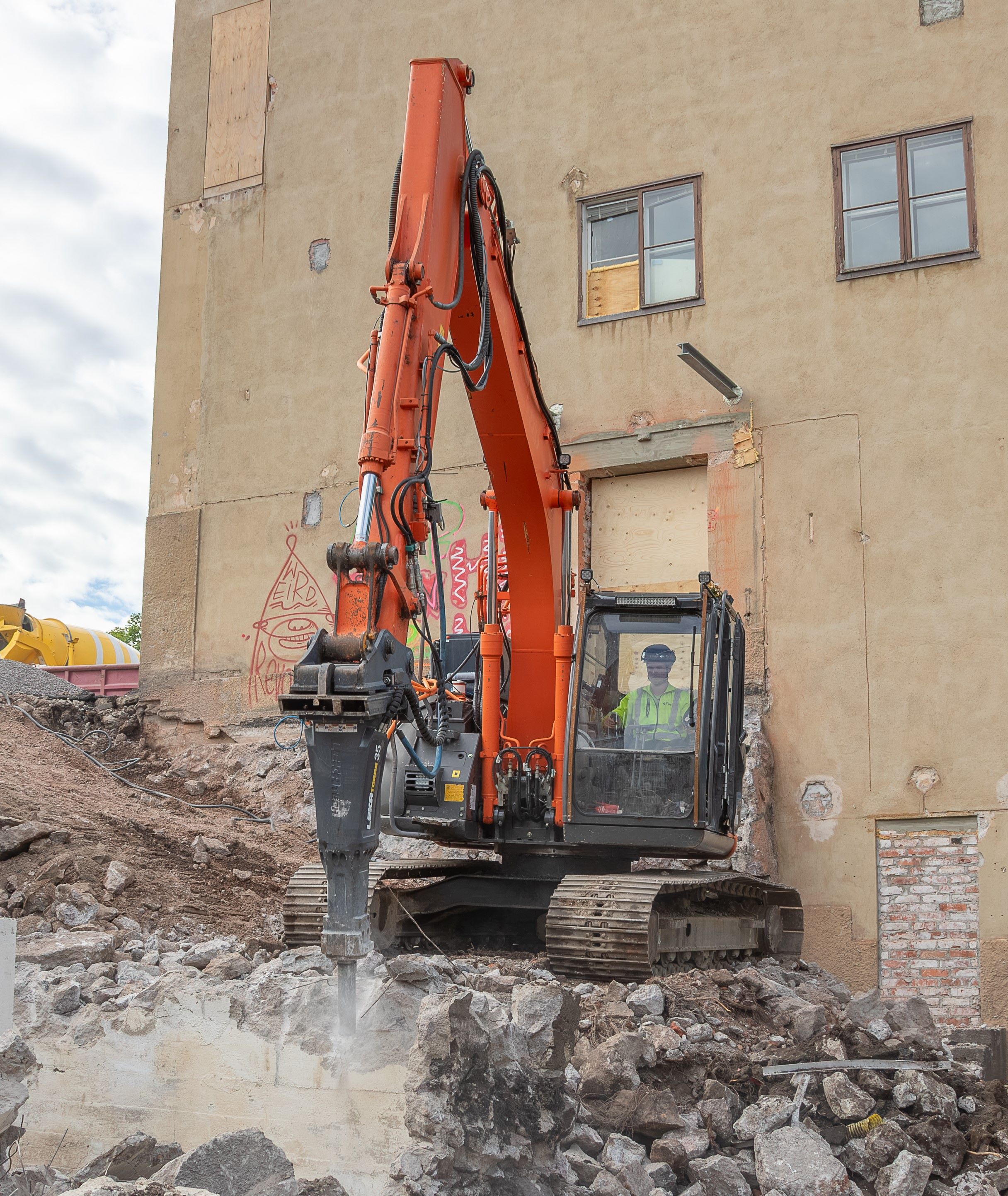
In practical terms, precise control provides benefits in a wide range of working conditions. For example, when carefully removing surface concrete or carrying out delicate demolition work, the impact can be adjusted to be very light and infrequent. Looking at some of the technical specifications from this perspective, the impact frequency can be adjusted between 60 and 900 blows per minute. Impact energy can be adjusted between 300 and 1,500 joules. Considering the impact energy in relation to the unit’s approximately 500 kg operating weight, the figures are impressive.
The Leka Toras 35 is designed for use with 7–16-ton base machines, and its 18-kW power requirement is highly competitive in relation to the impact energy achieved. The electric hammer is able to be used in wet operating conditions and can even be operated underwater.
Making a powerful impact
After the demolition work in Haaga had been completed using the Leka Toras 35, it was time to test its performance on granite. When striking the hard rock, the hammer performs its task efficiently, providing impressive power for a machine of its size. It should be noted that the particular model in question is not intended for quarrying applications but has proved more than capable of delivering impressive results at a number of quarries.
One highly noticeable feature is the sound. Even in this echoing environment of a quarry, or in an urban environment surrounded by buildings, the noise produced is noticeably moderate. Once again, the reason for this is the optimised impact energy. The electric hammer does not need to strike harder than is required with different operating programmes being available for concrete and rock.
A highly positive experience
When asked, SSA Rakennus site supervisor Arttu Manni said about his experience with the Lekatech electric hammer at the site, he commented: “It has definitely been quieter in terms of sound, and it has not caused vibrations in the neighbouring buildings when striking.” The low vibration level is also considered a positive feature when working close to structures that need to remain standing, such as directly next to walls.
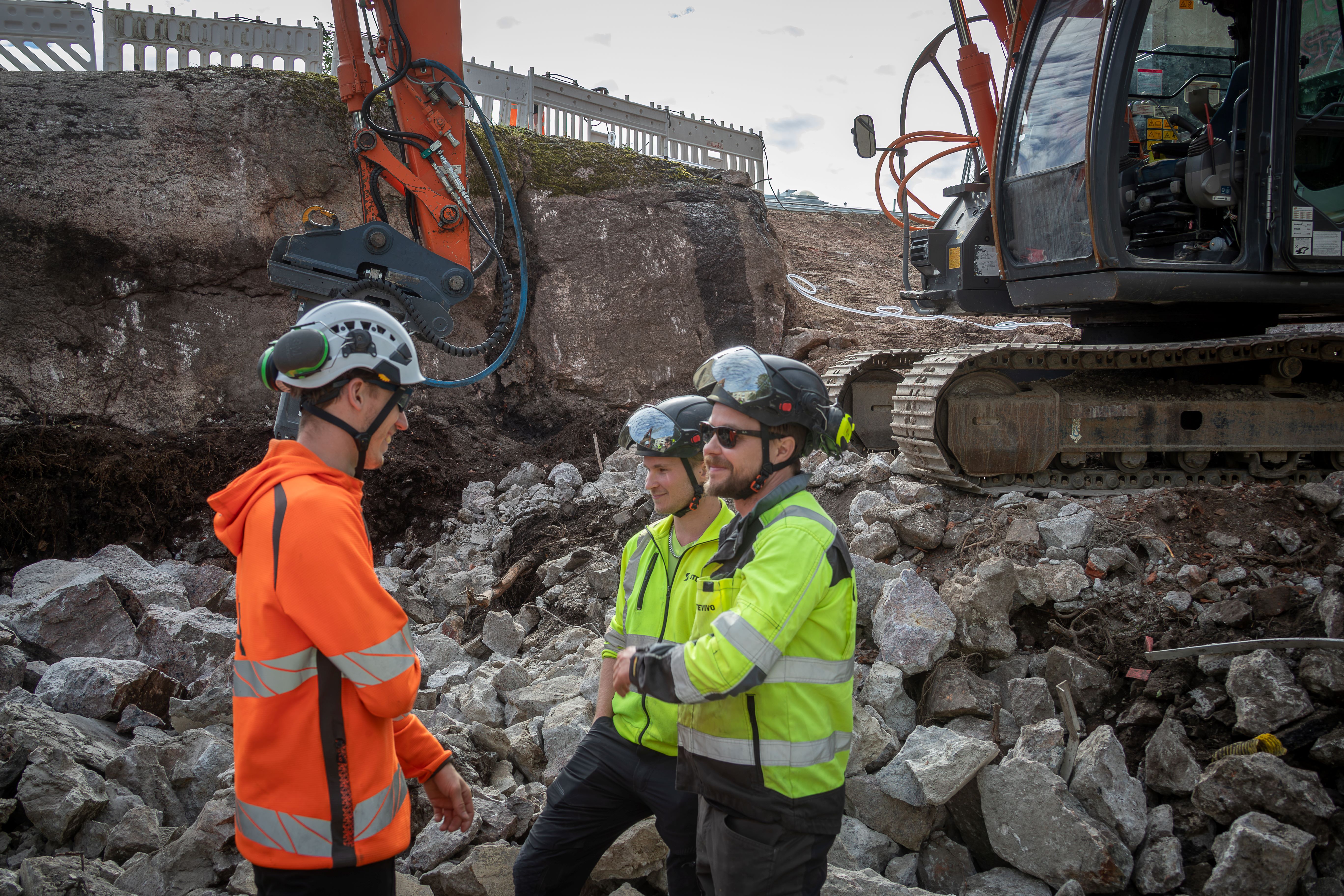
These features contribute to reducing the negative effects of using a hammer in urban developments. SSA Rakennus was keen that the neighbouring properties at the site should be disturbed as little as possible. Manni explains: “There is a daycare centre right next to the site, as well as many residents. We have not received any complaints, however.”
Manni concluded that the hammer has proved to be not only practical in everyday use, but also a good fit for the company’s projects more broadly. “We naturally also monitor fuel consumption and the carbon footprint of our construction sites, and we have a very positive impression of this hammer. We could certainly see ourselves using one on the next project as well.”