by Nick Drew | Thu 10 Sep 2026
JCB Goes X-Tra Large
Looking back at my visit to JCB earlier this year, when they launched not one, but two heavyweight excavators, including their largest ever the 520X.
Ever since the launch of the JCB X-Series excavators back in 2018, with the introduction of the 22-tonne class 220XLC, the range has been on an upward trajectory, proving themselves with customers and big fleet end users both nationally and internationally.
Just two years ago JCB launched their largest X-Series model to date the 370XLC which competes in the 35-40 tonne class sector, that machine itself has made a massive impact in the market with a large number of high-profile companies investing in them, and rightly so from my previous experience in the seat of one.
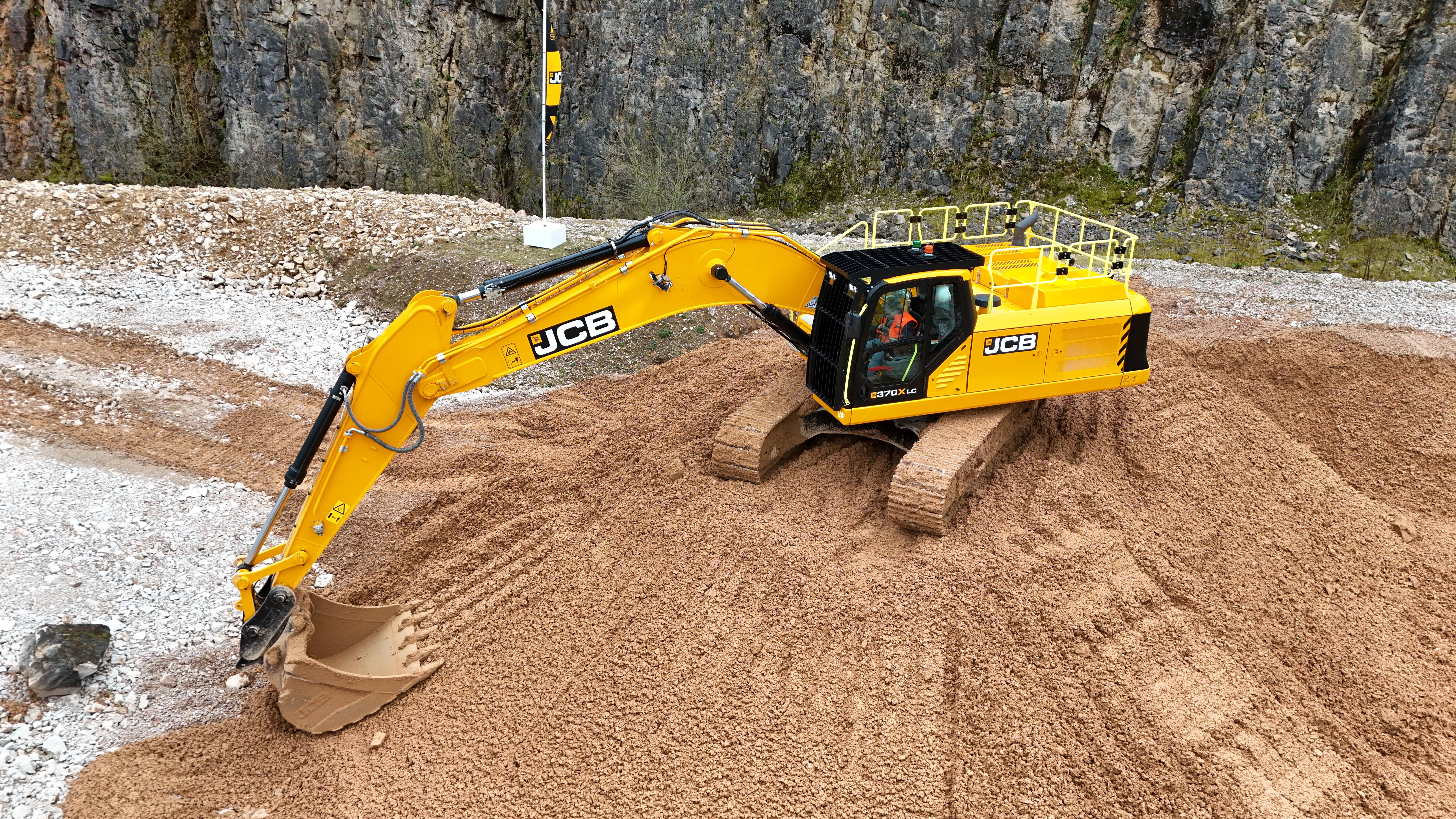
Photo: JCB 370X at the 2024 Launch Event Courtesy of Paul Argent.
Rumour was rife leading up to the JCB international press event about something big coming up, but to our surprise they revealed not one, but two even larger additions to the X-Series line-up, that incredibly have been secretly in development for the past 4 years, the 40-42 tonne class 420XLC and the new flagship, weighing in between 52-57 tonnes, the 520XLC which takes the crown as the largest hydraulic excavator ever built by JCB in their Heavy Products facility in Staffordshire.
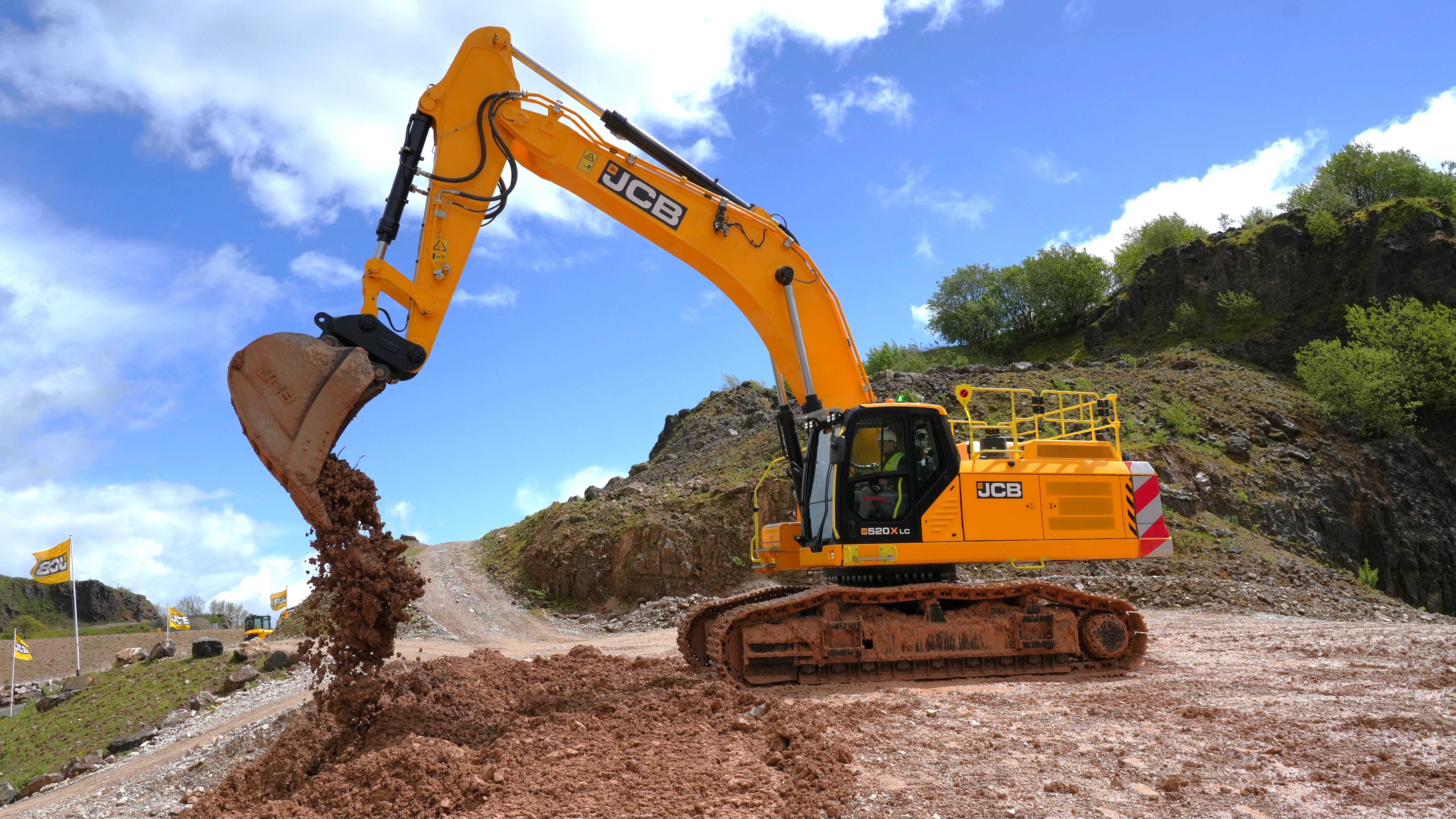
Following a tour of the heavy products facility we all headed up to JCB’s Kevin Quarry demonstration area to get up close and personal with these excavators, and a whole raft of other new products.
It’s no big secret that I do love an excavator, so as soon as the opportunity arose, I made a bee-line to them to take a look around and for some all-important time in the seat.
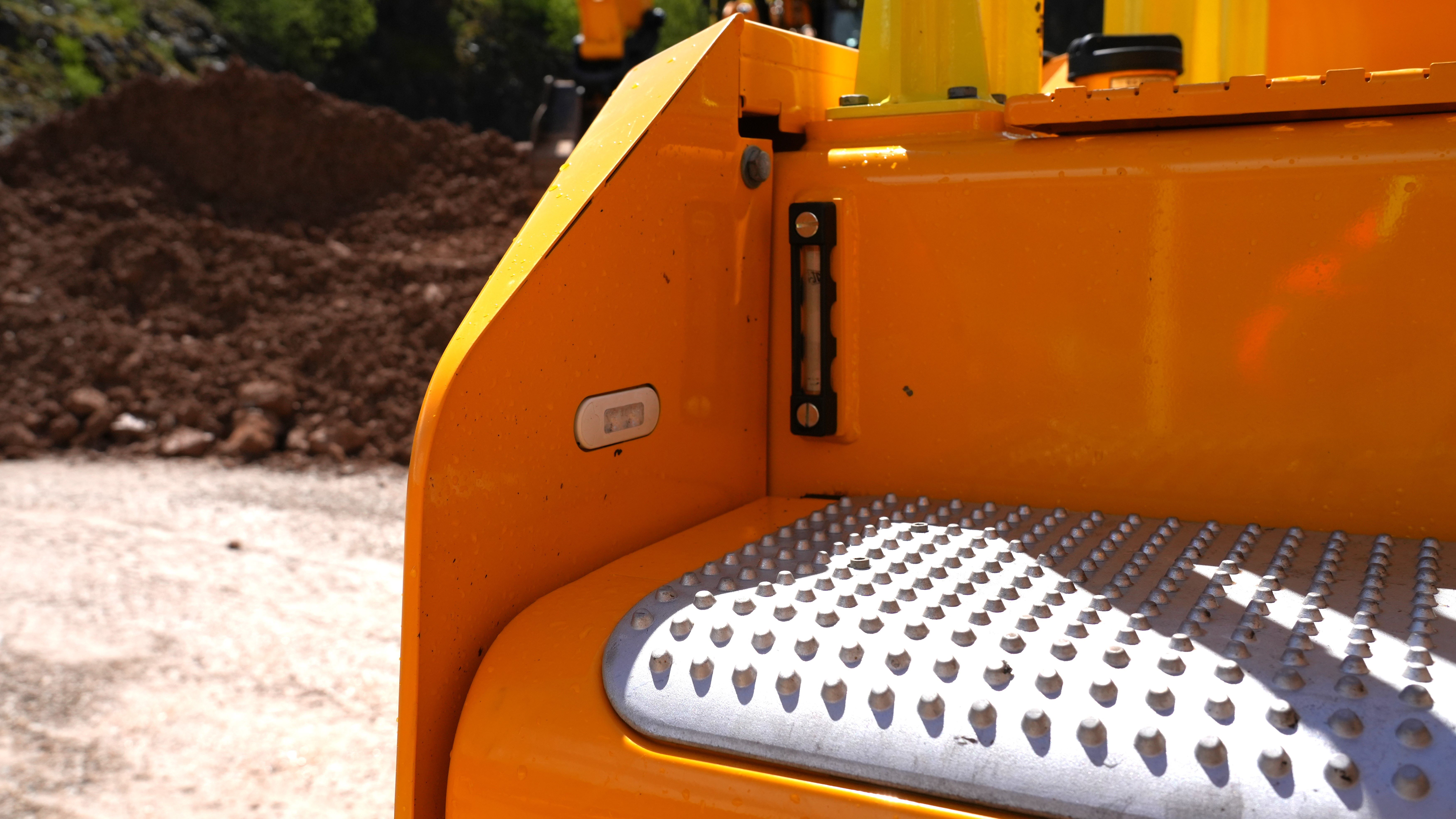
The 420XLC strikes an imposing sight by itself, and the X-Series DNA is evident from every angle. I started by making my way up to the engine bay. On a muddy underfoot day, I was really appreciative of the dimple effect anti-slip foot plates that guide you up over the forward tool box and the Ad-Blue compartment, assisted by a decent handrail to my left, followed by the all-encompassing boxing ring around the bonnet. A nice feature as seen on previous X-Series models is the step illumination lights that offer safe visibility for the operator during the long winter mornings.
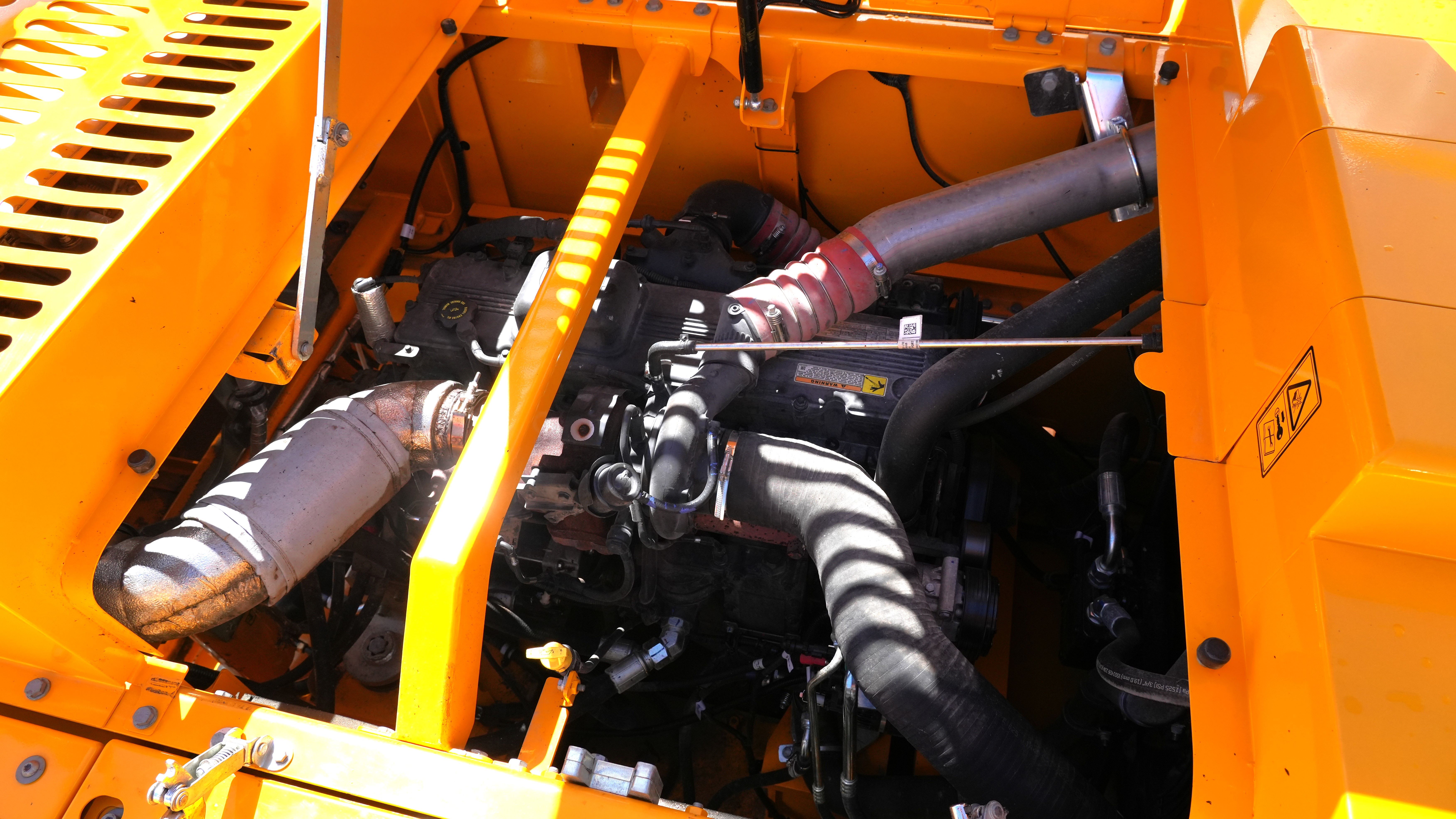
Popping the said bonnet lid reveals a blue-chip EU Stage V emissions compliant Cummins L9 4 stroke, 6 cylinder in-line, direct injection turbocharged diesel engine which offers an impressive net power output rating of 240kW (321hp) @1750 RPM, whilst delivering up to 1,526Nm of torque.
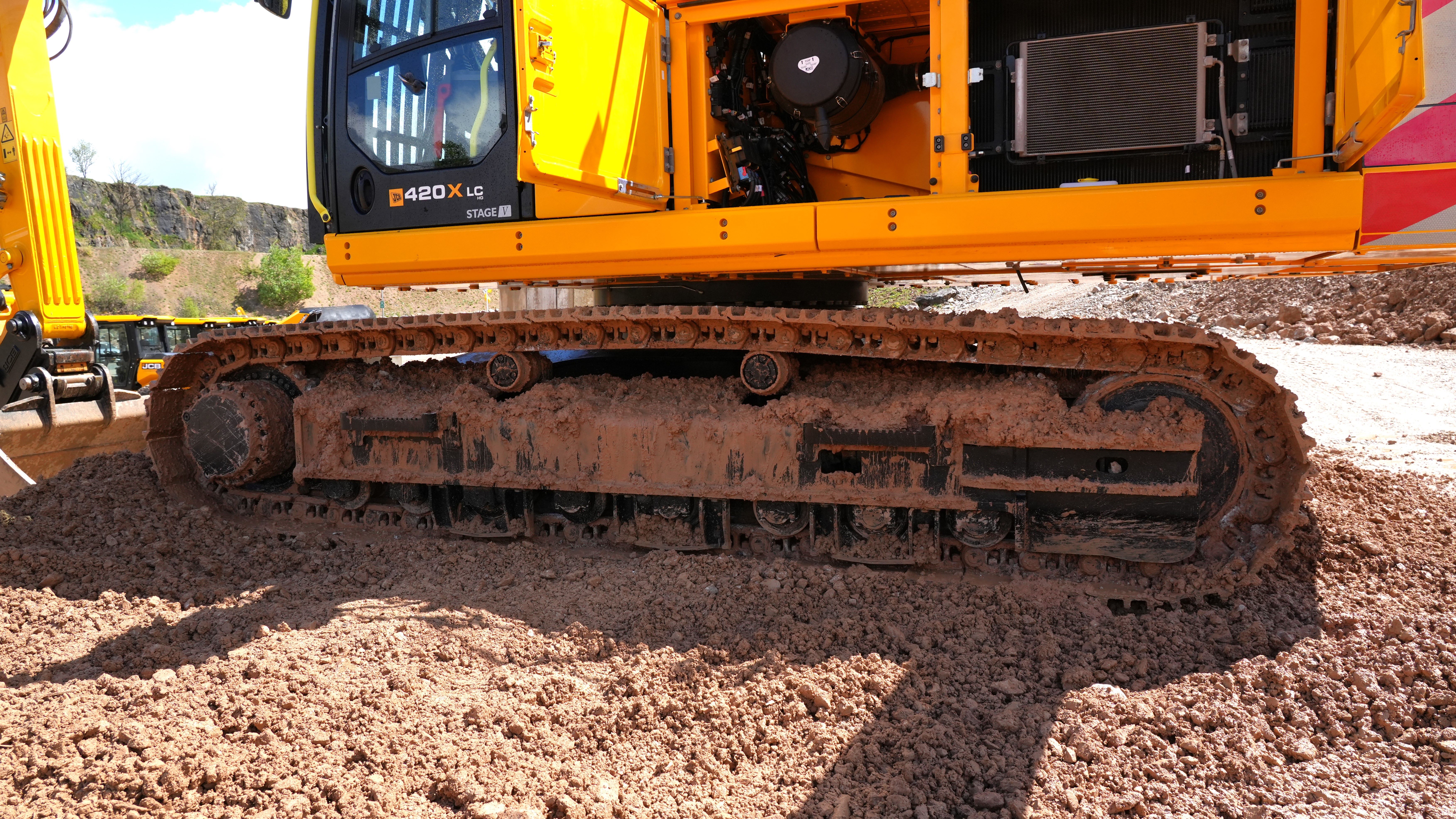
Back down at ground level and the heavy-duty undercarriage has an overall track length of 5140mm with 4020mm on the ground and when fitted with the standard 600mm track pads the overall width of the machine is 3340mm. The wide footprint is said to offer an 11% improvement during over the side lifting compared to the 370XLC.
The X-Frame undercarriage features two top (carrier) rollers and 8 lower rollers. A sloped frame has been designed in to facilitate ease of cleaning. It also features extra strengthening at the idler end, and this example was fitted with three lower frame track guards to prevent de-tracking. For real extreme conditions full length track guards can also be specified. This machine is also fitted with powerful 50-tonne class track motors, which JCB suggests delivers a whopping 21% increase in tractive effort, up to 345kN.
On the upper-structure optional demolition style impact body skirts are fitted to prevent damage, these form part of the Heavy-Duty Pro Pack option which also comes with heavy duty-belly plates, bucket ram guards and working light guards. The counterweight features all the usual curves that we have become accustomed to on the X-Series machines, in addition these examples were fitted with striking Brandfix reflective decals.
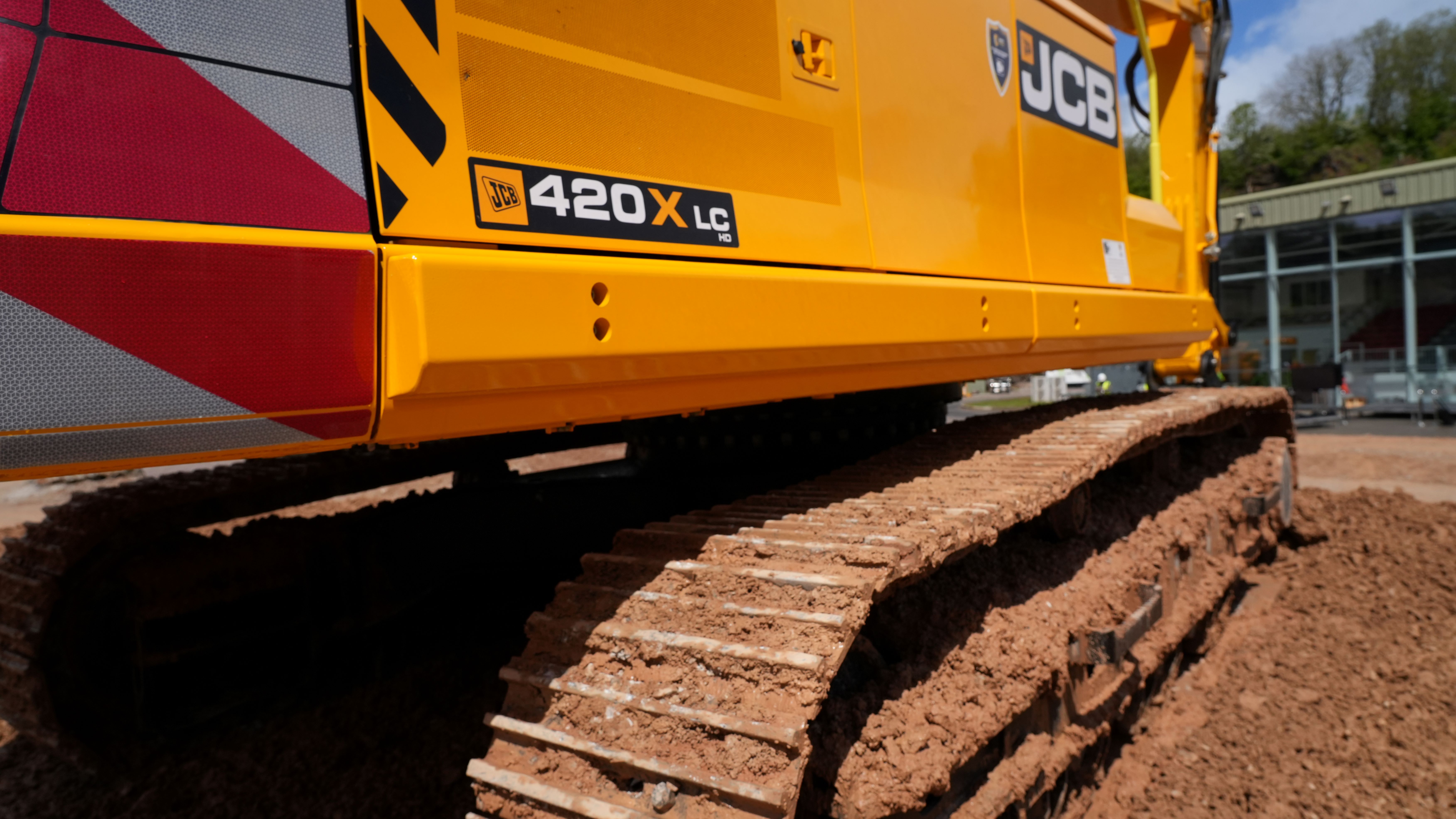
A 40mm larger slew ring has also been fitted, with higher load bearing capacity. This is said to improve durability during high torque swing cycles, for example during bench loading of dumptrucks and during repetitive stockpiling operations. With that in mind the slew motor and gearbox have also been upgraded, and offers a boost in slew torque, especially on initial take off as I was to discover during my demo drive.
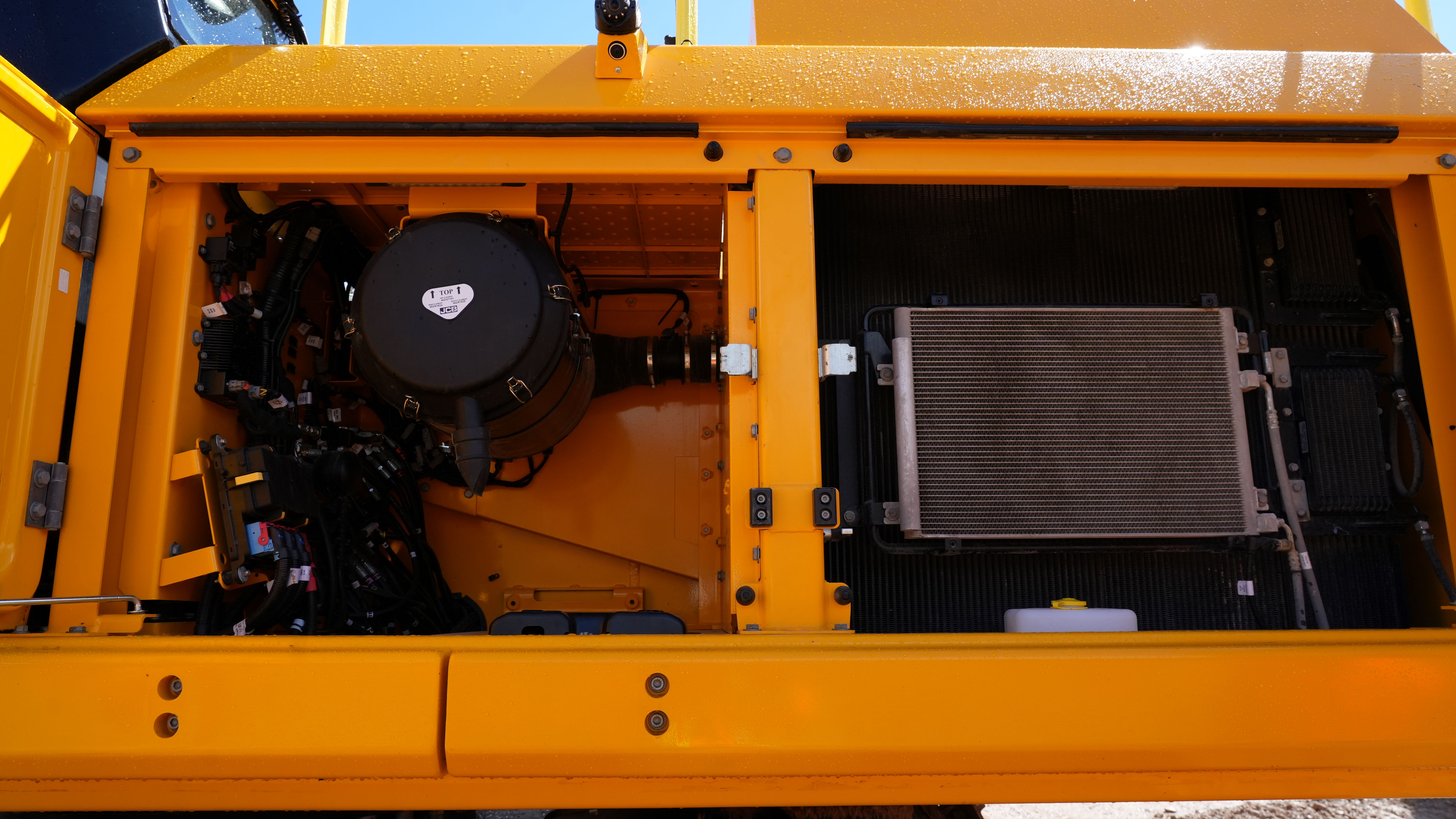
Behind the panel doors it’s the usual fare, on the nearside, twin opening doors open to reveal the air filter housing and electrical connections, whilst to the rear we find the cooling packs and screen washer bottle.
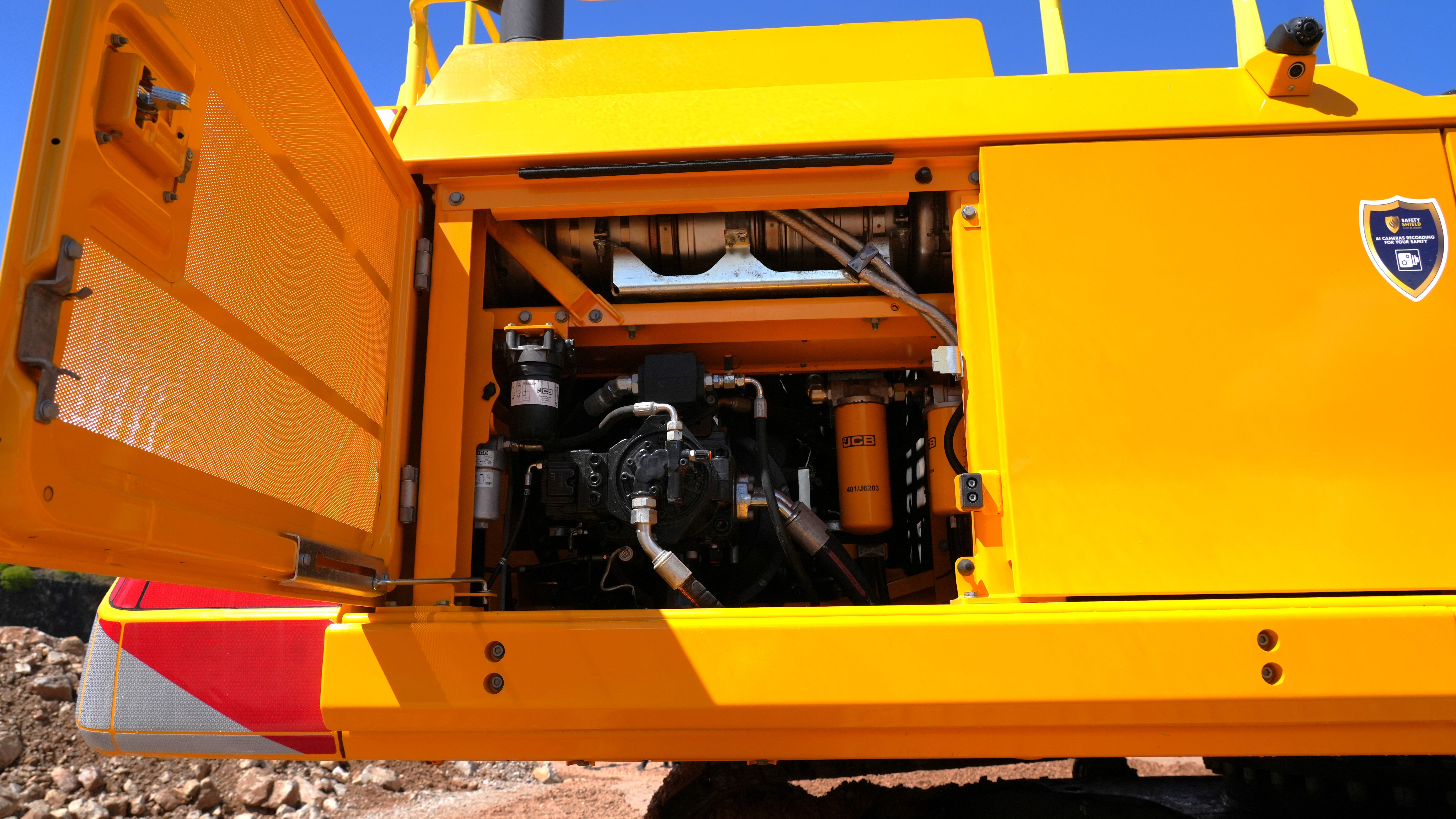
Behind the offside rear door panel, it’s the heart of the machines hydraulic system, in the form of the latest blue chip Kawasaki hydraulic pump. This as per industry standard, is also where you will find all the fluid filters, including engine oil, hydraulic oil and fuel, all accessible from ground level, but for those of us who are vertically challenged, one would probably need a step box to stand on.
At the business end the 420XLC is fitted with a standard 6.45m mono boom, and customers can choose from either 2.63m or 3.23m dipper arm options. Additional wear strips have been added onto the dipper arm face, a familiar feature on heavy duty application machines, and increased steel plate has been used to reinforce all front-end components.
The 420XLC’s hydraulic cylinder diameters have been increased on the arm and boom. On the boom especially this now gives the machine heavier lifting capability with the excavator being capable of lifting 940kg more at maximum reach than the 370XLC. The machine has been designed to be paired with a 2.6m3 heavy duty bucket, but I felt comfortable that it could handle a slightly larger one depending on application.
And so, to the ROPS/FOPS certified cab, we have all become familiar with JCB’s CommandPlus cab, which in my opinion is without doubt one of the best on the market, in terms of spaciousness, overall comfort, and safety, and another bonus is that you get the same cab across the range, even on the compact radius models, so operators always know what they are getting into.
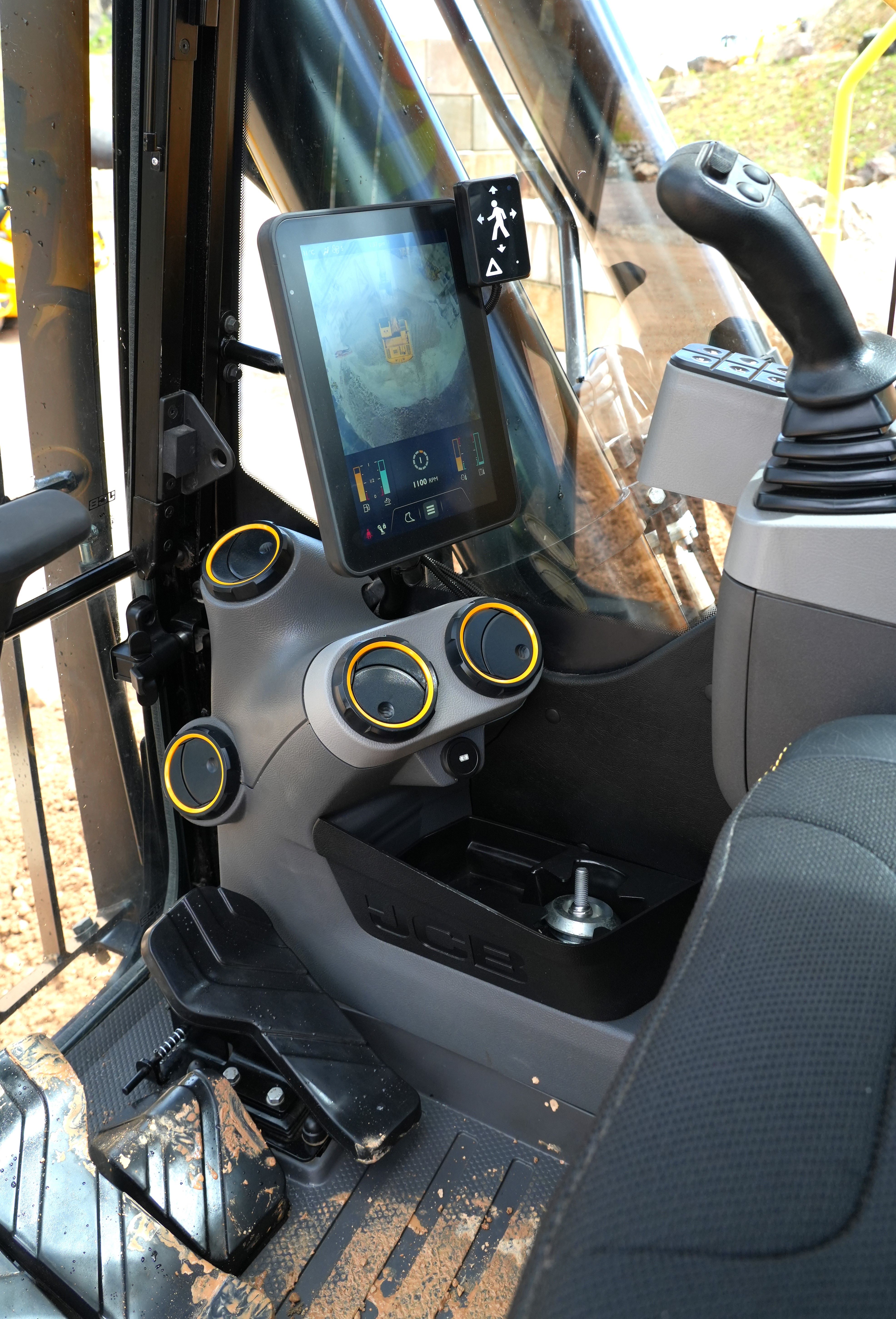
What you get is a premium air suspension seat, that is not only heated, but ventilated too, and as a bonus feature has adjustable electronic lumbar support, just like you would encounter in a high-end luxury motor car. All the control dials and buttons are located in the familiar layout to the operator’s right-hand side, all very ergonomically placed within easy reach.
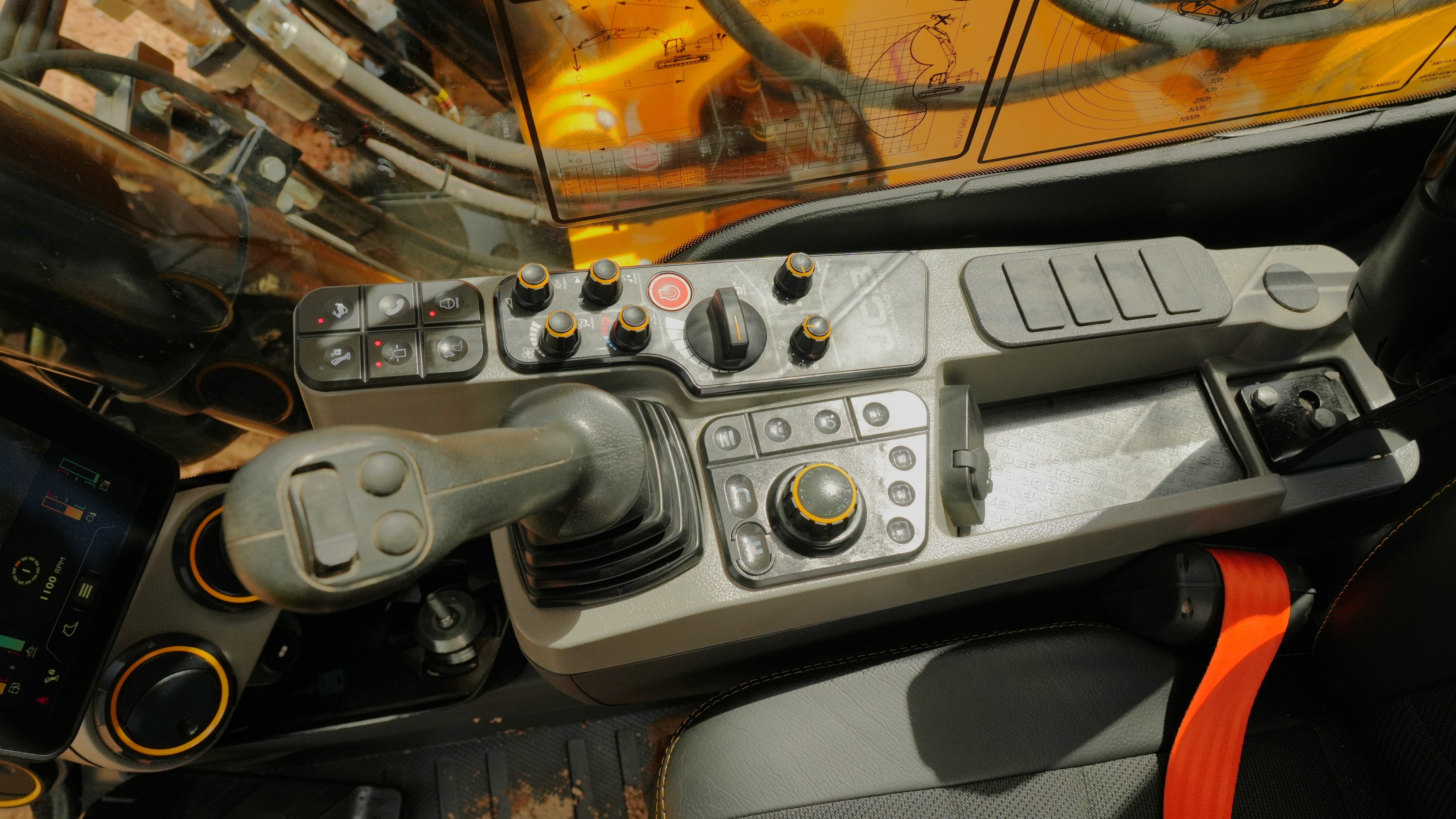
JCB’s latest UX user interface is fitted as standard and features a 10” tablet style full colour touch screen monitor, which via, operators can discover a whole host of functions, and machine status information/feedback.
They can also, if they wish to, customise the machine to suit their own operating preferences. They can also set up bespoke hotkeys, to allow rapid access to regularly used functions. The monitor can also store user profiles for up to 25 different operators, so they can save and locate their preferred joystick combinations and switch choices. I have to ask myself how many operators will actually do this though, most I know, myself included want to jump in crank the revs up and get digging at full power, but maybe I’m a little bit to ‘Old School’.
Like many other manufacturers JCB has moved towards keyless starting, by means of pressing the button, entering the code on the monitor, followed by a longer press on the button to fire up the engine, but of course you still need a key fob to open the door.
In terms of safety the machine already has great visibility thanks to the large glazed areas, but in addition a high definition 360 camera system allows the operator to view all-around the machine via the UX monitor, this example was also fitted with an aftermarket audible warning system to alert the operator about anyone encroaching the operational area of the machine, which offers great peace of mind for any heavy equipment operator.
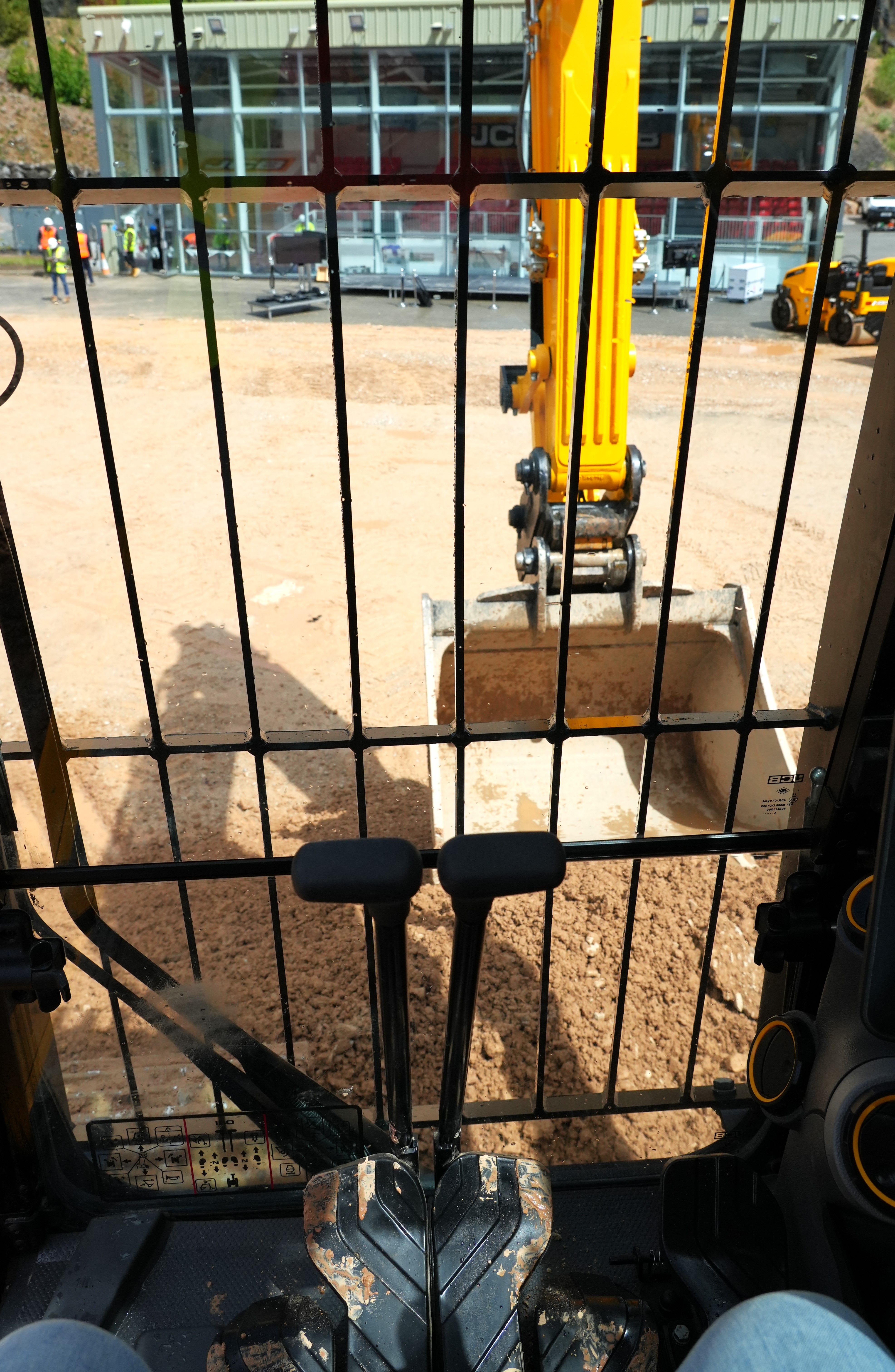
It was now time to put this beast to work. Settling down into the seat I adjusted it to suit my stature, and buckled up the bright orange seatbelt. Going through the start up procedure I eventually pushed the starter button, and the big Cummins 6-cylinder lump sprang into life, a beautiful hum to it I must say. I then had to navigate JCB’s 2-Go hydraulic isolation sequence and I was good to go.
Cranking up the throttle dial, I gave a tug on the right-hand joystick to raise the boom. At full stretch I dove the bucket into the wet material which was a mixture of limestone and sand, and it posed now problem for this big machine, as the bucket and dipper arm carved its way through the heap effortlessly. I was literally digging from one spot and casting away further up the slope, slewing no more than 180o. The slew speed is officially rated at 9.4 RPM, but I must say it felt a lot quicker which really impressed me, especially in that initial take off period.
Like most electro-hydraulic controlled machines they take a little bit of time to get used to, as you don’t get any feedback through the levers like we used to with the traditional servo controls, the play station generation will not find them a problem though, as it feels just like using a joystick on a computer game, this is the way that all manufacturers are going now though, and I’m confident they won’t be going back.
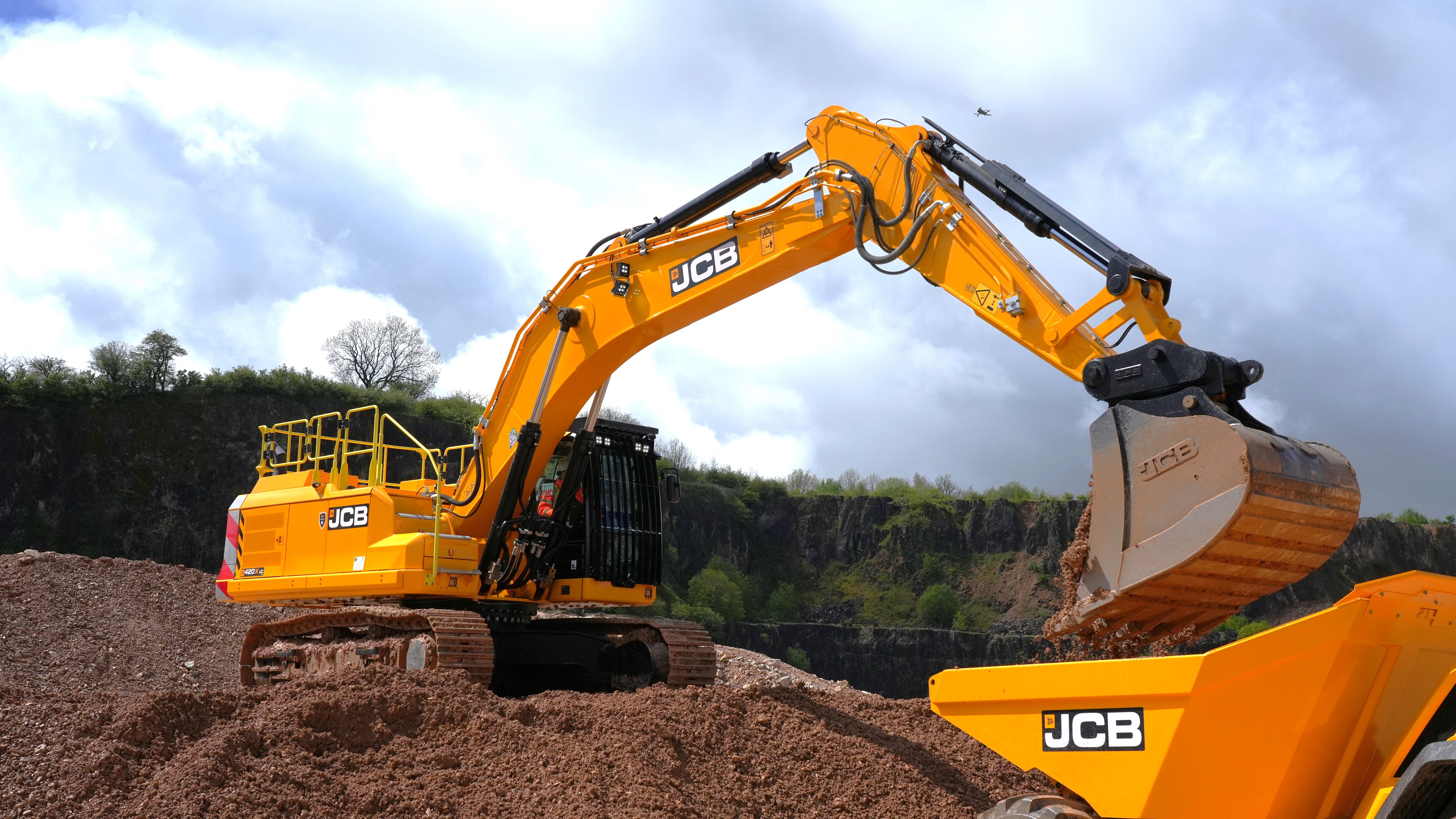
The more I used it the better it felt, and as I became more comfortable with it I opted to press the Power Plus button on the dial, for guys & girls working these machines on a high production site, this would be the go to setting, as it does give you that little bit extra poke, both in the dig and during the slew, in addition in the dig when encountering hard conditions, the working pressure can be boosted for a 9 second period at the touch of a button which increases the bucket tearout force significantly, a very handy feature when encountering large rocks for example.
Naturally in these sanitized demonstration plot scenarios we are limited with what we can do, and of course the material has been dug over many times before, but we can do enough to get a good feel for the machines, and this 40-tonner definitely left an impression on me, but bigger was yet to come!
520XLC
Just a short walk up the embankment and I got to encounter in person the largest hydraulic excavator ever built by JCB the 520XLC which had a dominating presence about it.
Those of us of a certain age will recall that they once produced a JS500LC model back in the 1990’s but I don’t believe many were built, however this new X-Series model is a very different beast, and will undoubtably put JCB right in the mix in terms of quarrying operations and bulk earthmoving.
Power on this machine comes once again from the well proven Cummins stable, with the X12 EU Stage V emissions compliant 6-cylinder in-line, direct injection turbocharged diesel engine, which offers a whopping net power output rating of 289kW (387hp) @1,400rpm.
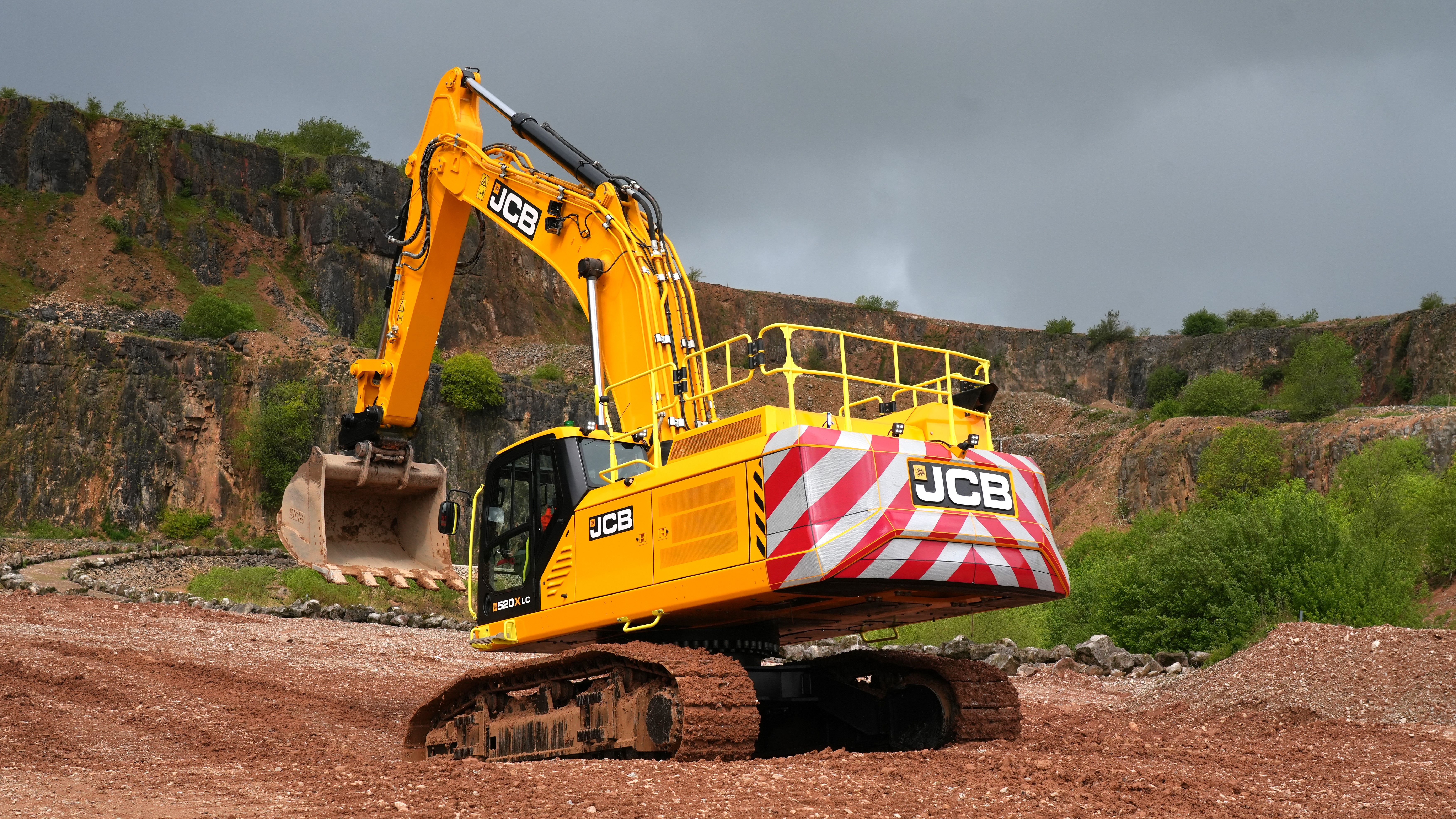
The machine features all the X-Series characteristics as mentioned on the 420XLC in terms of styling, operator comfort and safety but significantly bigger. The undercarriage, which is retractable for transportation, is a seriously strong looking fabrication, with an overall track length of 5368mm, and with 600mm track shoes fitted, a width of 3340mm, 3-top rollers are standard and 9 bottom rollers are provided. This example was also fitted with the full-length lower track guarding, a must have option in quarrying applications.
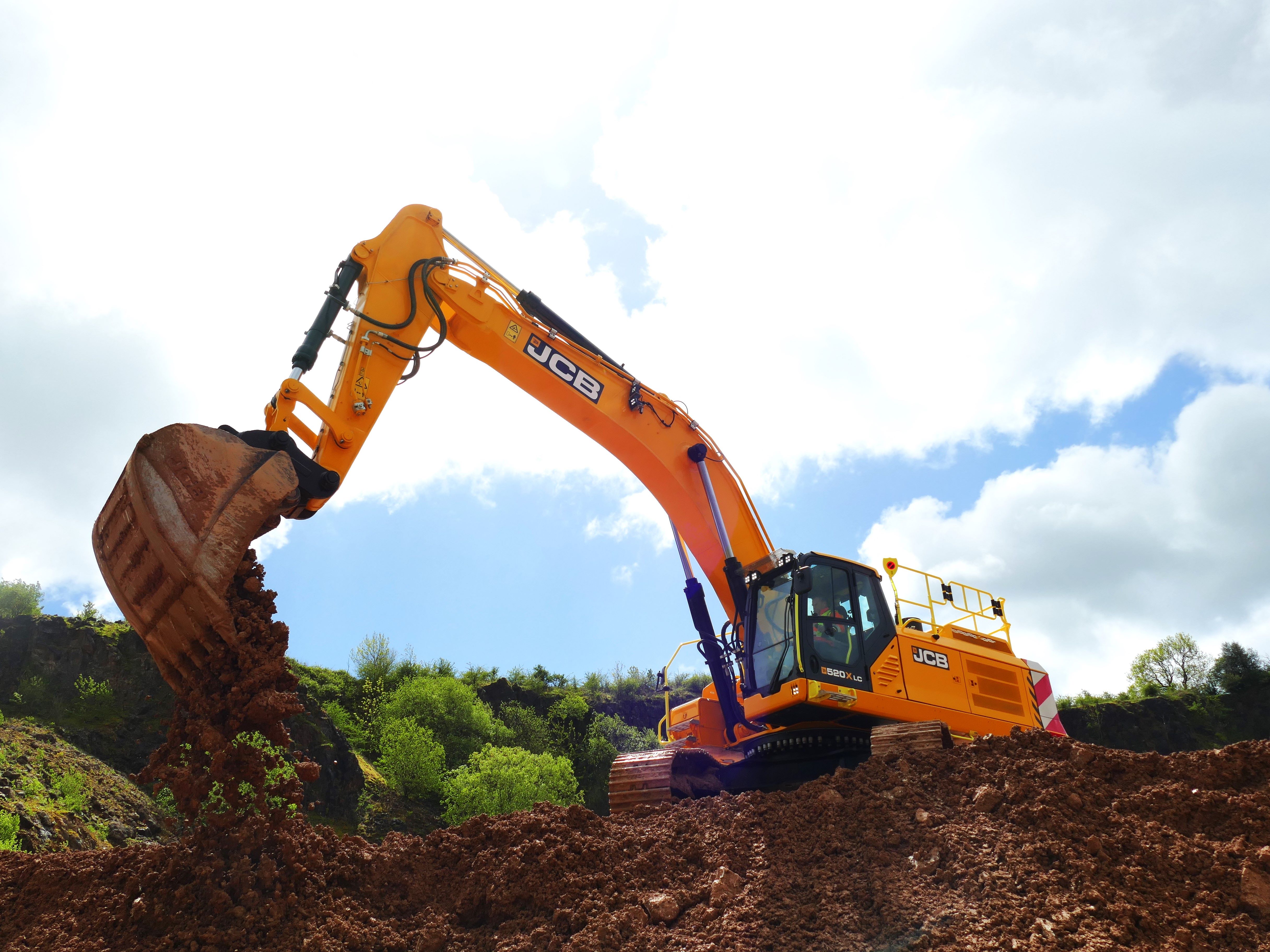
I was fortunate enough to be able to spend some very brief time on the 520XLC, and I must say it really didn’t disappoint. The beautiful noise of that Cummins six pot purring away, was a sound to behold, as the machine just went about its business effortlessly, combined with the refined Japanese hydraulic system that was super smooth in all movements, whilst offering precision and power in equal measure in response to my input through the joysticks. It was no slouch in the slewing department either, with a rated slew speed of 9.2rpm, only marginally slower than its smaller sibling the 420XLC.
With its massive on the ground footprint, the machine gave me a real sense of security in terms of stability, even with a full bucket of the wet material at full stretch over the side, the machine remained planted.
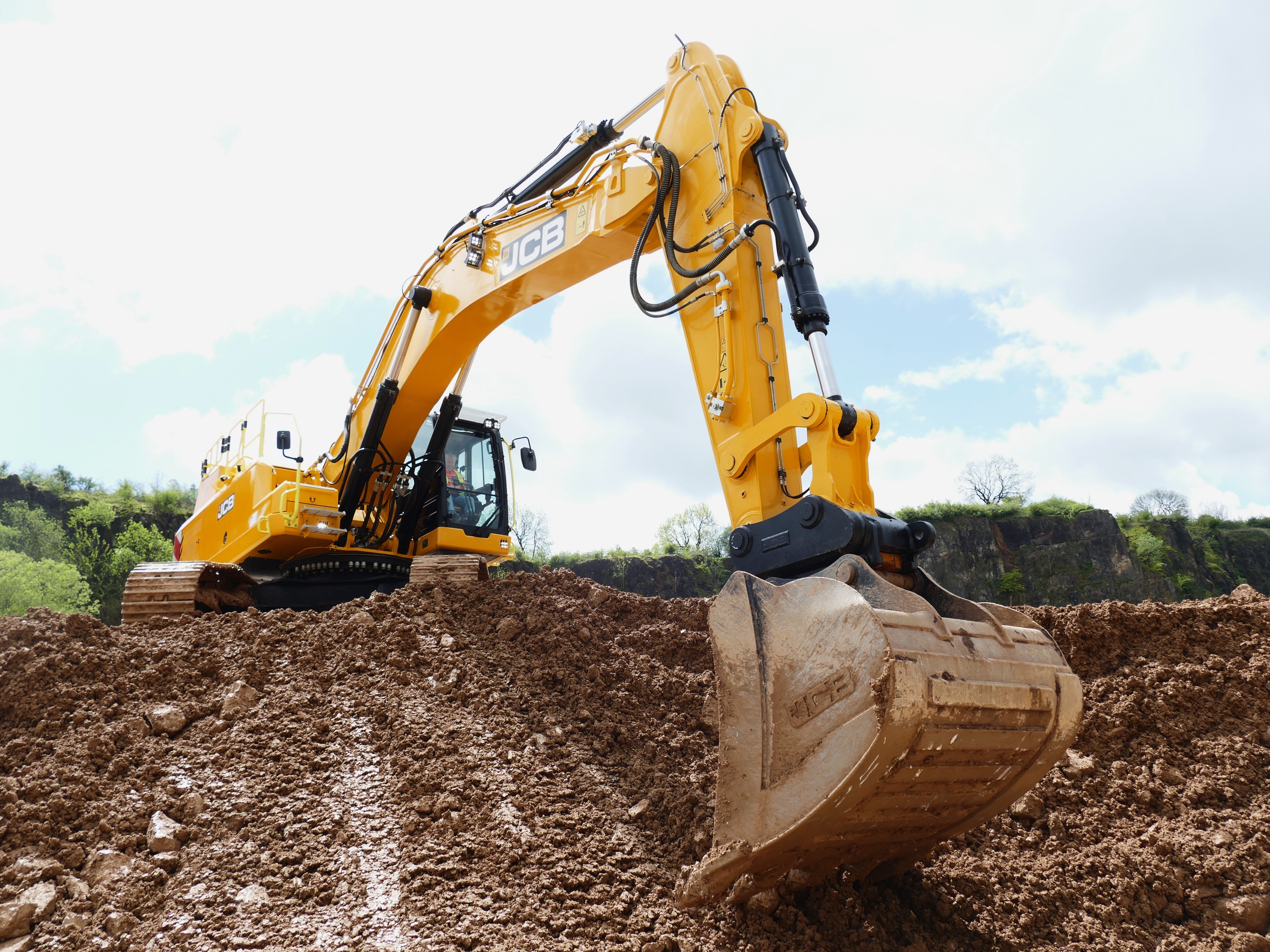
Once again, this machine left me with a beaming smile on my face as I departed the cab, it would be really good to spend a day on one, seriously putting it to work one of these days, and I look forward to visiting a customer who takes one on over the coming months, they will not be disappointed and neither will the lucky operator.